Concrete ballroom example
What a studio owner should picture.
Owners can see who is running low on lessons or needs follow-up before quiet drop-off turns into lost revenue.

 Ballroom Booking
Download the official app for iPhone, iPad, or Android.
Reporting
Show how owners can understand the studio without promising unverified advanced analytics.
Studio Operating View
Ballroom Booking
The problem
Revenue, lessons, package usage, student activity, sales, and follow-up needs matter most when they are visible enough to act on.
What Ballroom Booking does
Reporting focuses on practical visibility: revenue, lesson volume, package/account clarity, student activity, staff context, and follow-up needs.
Why generic software falls short
Generic dashboards can show totals. Ballroom owners need reports that connect lessons, packages, sales, low balances, public offers, and follow-up decisions.
Concrete ballroom example
Owners can see who is running low on lessons or needs follow-up before quiet drop-off turns into lost revenue.
Objection answered
Answers: Will reports help an owner make weekly decisions instead of rebuilding the studio from notes and spreadsheets?
Reporting view
Reporting should connect revenue, lessons, package/account activity, sales, student behavior, and follow-up needs.
Demo proof check
Use the demo to connect revenue, lessons, accounts, follow-up to the real workflow your studio needs, then decide whether this belongs in the first rollout.
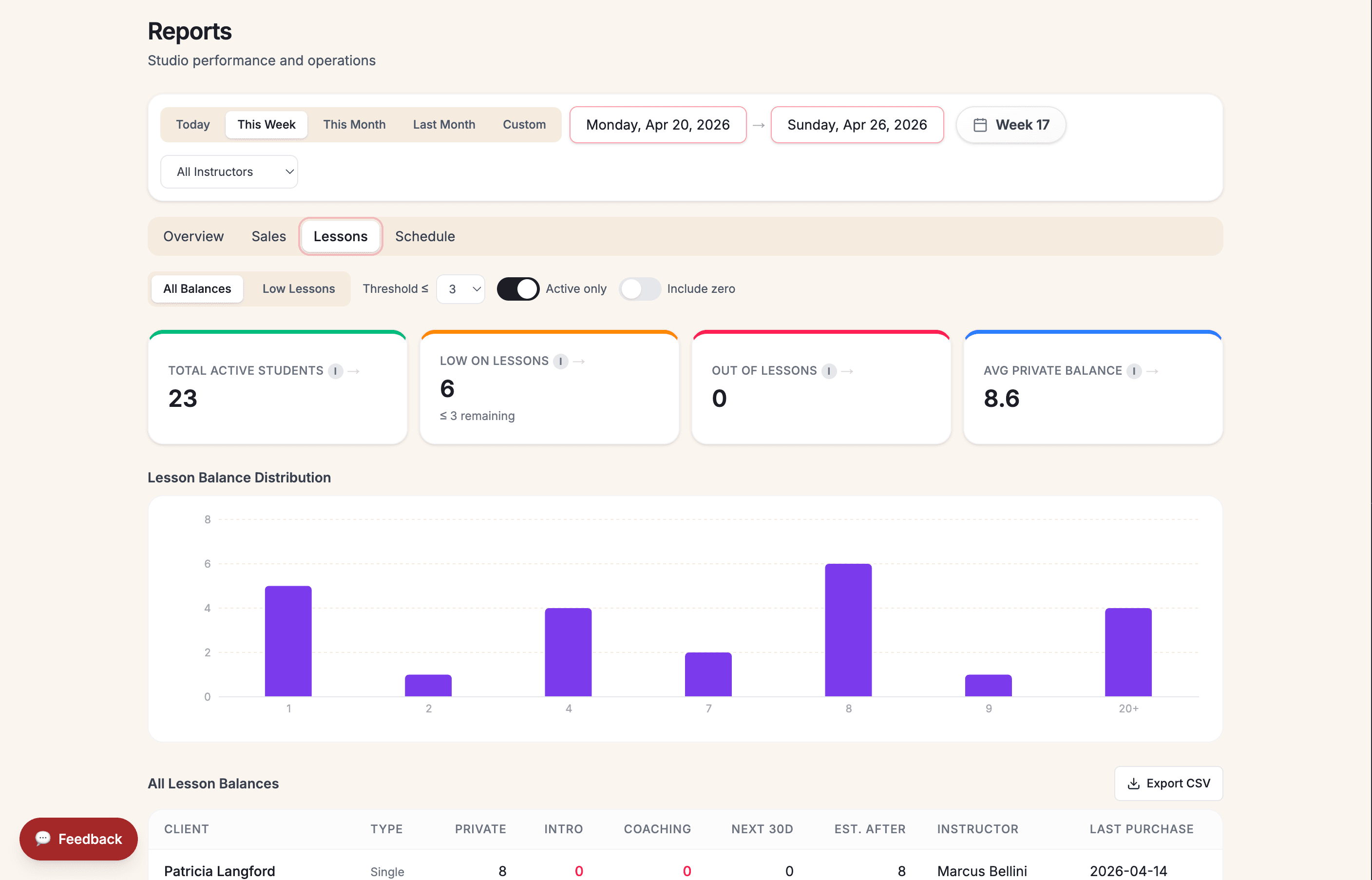
Reporting proof
Reports should help an owner answer what happened, who needs attention, and what changed without another spreadsheet.
What this screenshot shows
Lesson package proof
A lesson package is not just a credit count. Ballroom studios use packages to manage retention, renewal timing, staff confidence, and owner visibility.
Low balances should create a practical next-step conversation before the student runs out.
Staff need enough balance context to avoid guessing with students at the desk.
Owners should be able to review lessons remaining, low balances, and follow-up needs without rebuilding the day from spreadsheets.
Student or couple balance visibility and online package sales depend on enabled account, portal, payment, and checkout setup. Verify those paths in the demo before relying on them.
Gift certificate proof
Gift certificates affect sales, follow-up, scheduling, and redemption. Owner reporting should make it easier to ask which gifts were bought, which created visits, and which still need attention.
The demo should show how the studio keeps the purchaser, recipient, offer, amount, and next step clear enough for real staff use.
Staff need enough redemption context to help a recipient without turning the owner report into the only source of truth.
Owners should be able to review gift and public-sales activity alongside lessons, packages, and follow-up instead of rebuilding the picture by hand.
Online gift sales, public checkout, payment setup, and redemption handling depend on enabled public-sales and payment paths. Verify what is live, what is manual, and what should wait.
Follow-up proof
Owners need to know which lessons, purchases, packages, and quiet accounts create follow-up work. Reports should help them ask better questions before momentum is lost.
Lead interest, intro offers, gift certificates, low lesson balances, missed lessons, and inactive students should create clear questions, not a noisy task pile.
Staff should not depend on an owner report alone, but the report should make it easier to spot who needs a handoff.
Owners should be able to review follow-up needs alongside sales, lessons, packages, and student activity.
Use the demo to confirm what is visible today, who owns the next step, and which outreach remains a staff decision. Do not assume automated messaging unless it is shown live.
Reporting proof
Useful reporting is not a chart gallery. A ballroom owner needs to know which lessons happened, which packages are drifting, which sales created follow-up, and which students need attention.
Use the demo to walk through a real week: schedule activity, package movement, public sales, follow-up needs, and the decisions an owner would make next.
Why this matters in a ballroom studio
Owners need to understand the studio without rebuilding the day from memory, texts, receipts, and spreadsheets after everyone has gone home.
Common workaround this replaces
End-of-day reconstruction, manual revenue sheets, separate lesson tallies, and guesses about who needs follow-up.
Owner benefit
Better reporting helps owners make calmer decisions about scheduling, sales, staffing, and follow-up.
Feature highlights
FAQ
Short answers for owners deciding whether this workflow belongs in the first demo conversation.
Practical visibility into revenue, lessons, package/account activity, student behavior, and follow-up needs.
The first value is clarity. Owners need trustworthy answers they can act on without rebuilding the day from scattered notes.
Related workflows
Most studios evaluate Ballroom Booking by following the pain from one real workflow into the next.
Related resources
These guides give a studio owner practical questions to bring into a demo conversation.
Next step